




The MWNF Exhibition Trails |
 Profile | Chronology Profile | Chronology |
||||||
|
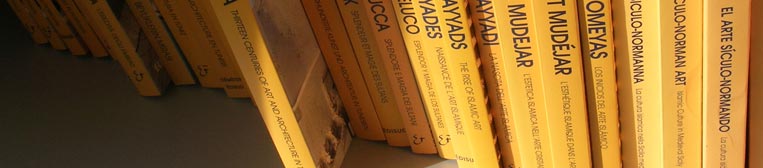
The MWNF Exhibitions Trails use museums as the starting points for thematic visits to a specific country or region. Accompanied by an exhibition catalogue that takes on the role of a thematic guide book, the visitor is encouraged to discover the exhibits in situ. Where possible, the monuments, sites and artefacts at the museums that are part of the visit are marked by distinctive panels. To date MWNF has launched 15 Exhibition Trails forming part of four international cycles – Medieval Art, Baroque Art, The Great Patrons of the Arts and Islamic Art in the Mediterranean. The related exhibition catalogues are available in up to six languages including English, French, German, Italian, Portuguese, Spanish and Turkish, and Arab editions of some titles are under preparation. Most MWNF catalogues are the first scholarly publication on their subject, for example Mudéjar Art; Siculo-Norman Art and Andalusian Morocco. The 15 Exhibitions Trails have introduced some 2,250 monuments and archaeological sites – most of them little known – to a wider audience and have thus been an important catalyst for local development.
The MWNF Exhibition Trails aim to develop tourism for individuals and small groups and focus on lesser-known themes, monuments and regions. The exhibition catalogues are written by local scholars and are often the first available guide books to present the history and artistic legacy of the different countries and regions from the local perspective. Each Trail forms part of an international thematic cycle of Exhibition Trails and presents the selected theme within a local context, which may be national or regional. MWNF explores areas of European cultural heritage that have often been excluded from classical historical perspectives and offers a means for developing and promoting monuments and archaeological sites that have been bypassed by traditional tourism. By raising awareness of these monuments and sites through the innovative exhibitions developed by MWNF, countries are offered opportunities to obtain investment for their restoration and preservation and to benefit from the economic and media impact of the Exhibition Trails by staging related cultural events to attract visitors. The MWNF aims to promote a sense of pride in local cultural heritage, creating a feeling of equality within the global heritage marketplace, while at the same time bringing social and economic benefits to the participating countries through expanded tourism. It is hoped that funding for research and conservation projects will be stimulated by this greater professional and public knowledge of their historic monuments and museum collections. In addition, MWNF carries out training programmes and organises workshops to familiarise local project teams with the MWNF methodology.
|
||||||
 Print this page Print this page |
||||||
 Back
Back

